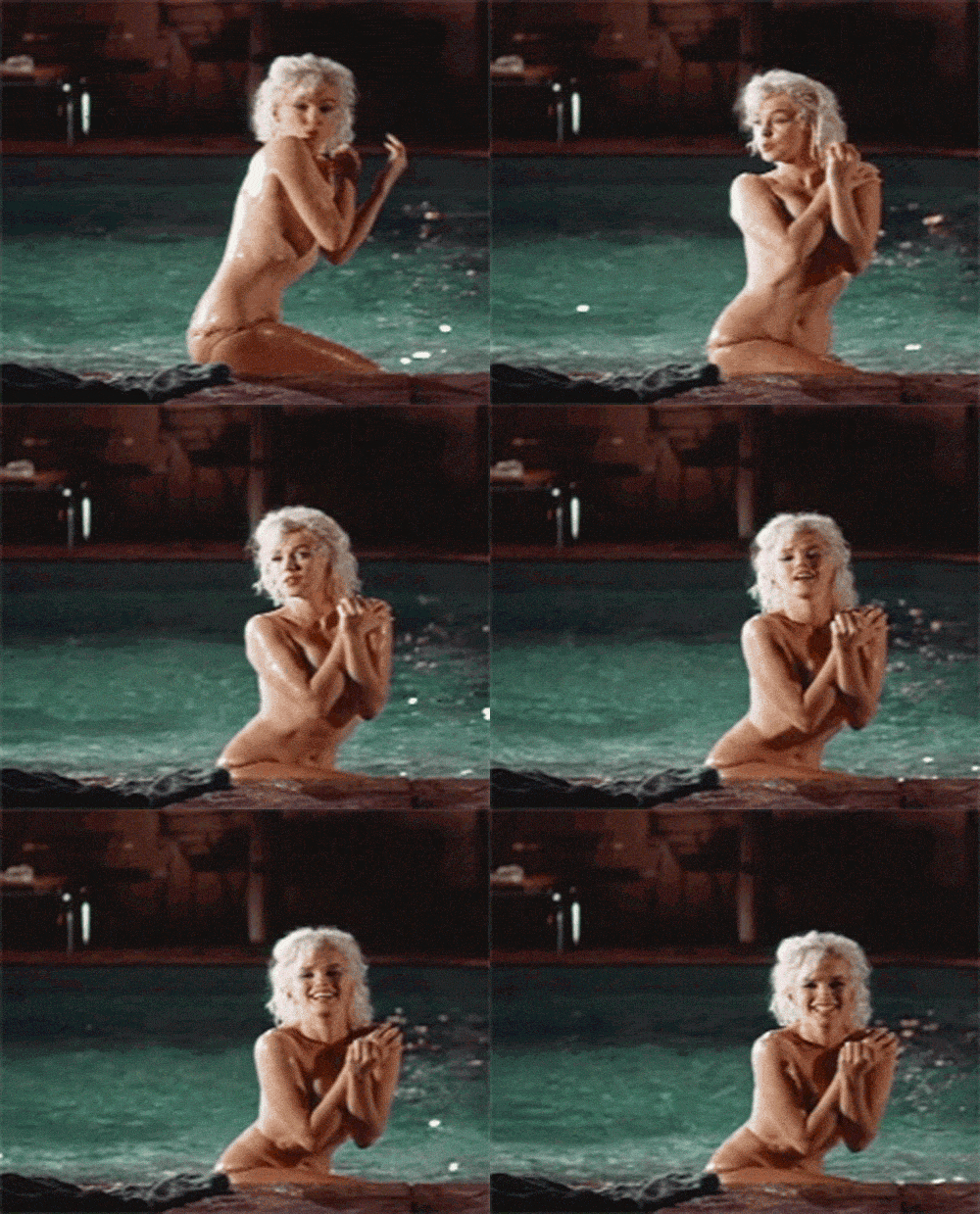
Aug. 28th, 2012

Marilyn?

Aug. 28th, 2012 12:00 am
monk222: (Girls)

“I believe that everything happens for a reason. People change so that you can learn to let go, things go wrong so that you appreciate them when they’re right, you believe lies so you eventually learn to trust no one but yourself, and sometimes good things fall apart so better things can fall together.”

-- Marilyn Monroe

Marilyn?

Aug. 28th, 2012 12:00 am
monk222: (Girls)

“I believe that everything happens for a reason. People change so that you can learn to let go, things go wrong so that you appreciate them when they’re right, you believe lies so you eventually learn to trust no one but yourself, and sometimes good things fall apart so better things can fall together.”

-- Marilyn Monroe
monk222: (Mori: by tiger_ace)
"Sometimes I wish that I could have my life to live over, if not to live it better, then at least to write it better."

-- Monk

This is a lament I often have when I look over diary entries from ages past when life was a little fuller. Those entries are usually so blah and general, barely hinting at the life lived in those days and the friends I had. Even if it was a pretty miserable little life, I can wish to have another crack at writing it down in my journals. I feel like I could have filled a notebook per day, filled with a virtual transcription of our conversations and laughter, rather than the few banal lines I did leave behind.
monk222: (Mori: by tiger_ace)
"Sometimes I wish that I could have my life to live over, if not to live it better, then at least to write it better."

-- Monk

This is a lament I often have when I look over diary entries from ages past when life was a little fuller. Those entries are usually so blah and general, barely hinting at the life lived in those days and the friends I had. Even if it was a pretty miserable little life, I can wish to have another crack at writing it down in my journals. I feel like I could have filled a notebook per day, filled with a virtual transcription of our conversations and laughter, rather than the few banal lines I did leave behind.
monk222: (Flight)
Nothing is efficient in Oceania except the Thought Police. Since each of the three superstates is unconquerable, each is in effect a separate universe within which almost any perversion of thought can be safely practiced. Reality only exerts its pressure through the needs of everyday life - the need to eat and drink, to get shelter and clothing, to avoid swallowing poison or stepping out of top-story windows, and the like. Between life and death, and between physical pleasure and physical pain, there is still a distinction, but that is all. Cut off from contact with the outer world, and with the past, the citizen of Oceania is like a man in interstellar space who has no way of knowing which direction is up and which is down. The rulers of such a state are absolute, as the Pharaohs or the Caesars could not be. They are obliged to prevent their followers from starving to death in numbers large enough to be inconvenient, and they are obliged to remain at the same low level of military technique as their rivals; but once that minimum is achieved, they can twist reality into whatever shape they choose.

-- “1984” by George Orwell


What makes Orwell’s dystopian world particularly distinctive and even hauntingly claustrophobic is the complete control over thought, and hence reality, that the totalitarian state exercises. We see this most prominently in Winston’s role as a journalist for the Ministry of Truth in which history is constantly and comprehensively rewritten to fit the present dictates of Big Brother. More generally, though, we should appreciate that this total control applies not only to history but to all knowledge, and even to what can possibly be said, as evinced through the development of Newspeak, cutting away the language to a bare minimum to support Party needs and nothing more. We will see the nature of this radical twisting of reality brought out more clearly in the upcoming torture scene.

In today’s installment from Emmanuel Goldstein’s book, we see the basic social infrastructure that makes this kind of thought-control possible. It seems to depend on a strangely maintained stagnancy. First, there is the stability that comes from the supposed inability of any of the three superstates to conquer another, and then there is the forced scarcity that makes technological progress expendable. Cut off from the pressures of competition and material progress, the totalitarian government is able to effect a comprehensive and perfect cocoon around the minds of the citizens.

This is obviously unrealistic. Despite the best efforts of totalitarians, even if they wished to use “1984” as a blueprint, reality is simply too dynamic to be held in check by any government. Nevertheless, one has to respect Orwell’s authorial choices, as he creates a chilling dystopian world that fascinates the imagination, and whatever this vision may lack in reality, it perhaps makes up for in its vivid presentation of what is the ultimate goal of a totalitarian government, the radical reduction of humanity to the needs of the government to maintain its power.

monk222: (Flight)
Nothing is efficient in Oceania except the Thought Police. Since each of the three superstates is unconquerable, each is in effect a separate universe within which almost any perversion of thought can be safely practiced. Reality only exerts its pressure through the needs of everyday life - the need to eat and drink, to get shelter and clothing, to avoid swallowing poison or stepping out of top-story windows, and the like. Between life and death, and between physical pleasure and physical pain, there is still a distinction, but that is all. Cut off from contact with the outer world, and with the past, the citizen of Oceania is like a man in interstellar space who has no way of knowing which direction is up and which is down. The rulers of such a state are absolute, as the Pharaohs or the Caesars could not be. They are obliged to prevent their followers from starving to death in numbers large enough to be inconvenient, and they are obliged to remain at the same low level of military technique as their rivals; but once that minimum is achieved, they can twist reality into whatever shape they choose.

-- “1984” by George Orwell


What makes Orwell’s dystopian world particularly distinctive and even hauntingly claustrophobic is the complete control over thought, and hence reality, that the totalitarian state exercises. We see this most prominently in Winston’s role as a journalist for the Ministry of Truth in which history is constantly and comprehensively rewritten to fit the present dictates of Big Brother. More generally, though, we should appreciate that this total control applies not only to history but to all knowledge, and even to what can possibly be said, as evinced through the development of Newspeak, cutting away the language to a bare minimum to support Party needs and nothing more. We will see the nature of this radical twisting of reality brought out more clearly in the upcoming torture scene.

In today’s installment from Emmanuel Goldstein’s book, we see the basic social infrastructure that makes this kind of thought-control possible. It seems to depend on a strangely maintained stagnancy. First, there is the stability that comes from the supposed inability of any of the three superstates to conquer another, and then there is the forced scarcity that makes technological progress expendable. Cut off from the pressures of competition and material progress, the totalitarian government is able to effect a comprehensive and perfect cocoon around the minds of the citizens.

This is obviously unrealistic. Despite the best efforts of totalitarians, even if they wished to use “1984” as a blueprint, reality is simply too dynamic to be held in check by any government. Nevertheless, one has to respect Orwell’s authorial choices, as he creates a chilling dystopian world that fascinates the imagination, and whatever this vision may lack in reality, it perhaps makes up for in its vivid presentation of what is the ultimate goal of a totalitarian government, the radical reduction of humanity to the needs of the government to maintain its power.

Pretty Fit

Aug. 28th, 2012 03:00 pm
monk222: (Flight)


President Barack Obama throws a football at Soldier Field following the NATO Summit working dinner on May 20, 2012 in Chicago, Illinois. By Pete Souza/The White House via Getty Images.

-- Sully's Dish

Pretty Fit

Aug. 28th, 2012 03:00 pm
monk222: (Flight)


President Barack Obama throws a football at Soldier Field following the NATO Summit working dinner on May 20, 2012 in Chicago, Illinois. By Pete Souza/The White House via Getty Images.

-- Sully's Dish
monk222: (Default)
She walks in beauty, like the night
Of cloudless climes and starry skies;


-- Lord Byron
monk222: (Default)
She walks in beauty, like the night
Of cloudless climes and starry skies;


-- Lord Byron
monk222: (Devil)
"Forbes" magazine has put out its list of the top twenty paid celebrities, and I thought I'd get it down even though I cannot see how anyone is worth more than a million dollars, unless they have come up with a cure for cancer or even the West Nile Virus.


_ _ _

20. Britney Spears - $58 million

19. Ryan Seacrest - $59 million

18. Donald Trump - $63 million

17. Dr. Phil - $64 million

16. Manny Pacquiao - $67 million

15. Rush Limbaugh - $69 million

14. Dick Wolf - $70 million

13. Tom Cruise - $75 million

12. Elton John - $80 million

11. Glenn Bleck - $80 million

10. Simon Cowell - $90 million

9. George Lucas - $90 million

8. James Patterson - $94 million

7. Howard Stern - $95 million

6. Tyler Perry - $105 million

5. Dr. Dre - $110 million

4. Jerry Bruckheimer - $115 million

3. Steven Spielberg - $130 million

2. Michael Bay - $160 million

1. Oprah Winfrey - $165 million

-- ONTD

monk222: (Devil)
"Forbes" magazine has put out its list of the top twenty paid celebrities, and I thought I'd get it down even though I cannot see how anyone is worth more than a million dollars, unless they have come up with a cure for cancer or even the West Nile Virus.


_ _ _

20. Britney Spears - $58 million

19. Ryan Seacrest - $59 million

18. Donald Trump - $63 million

17. Dr. Phil - $64 million

16. Manny Pacquiao - $67 million

15. Rush Limbaugh - $69 million

14. Dick Wolf - $70 million

13. Tom Cruise - $75 million

12. Elton John - $80 million

11. Glenn Bleck - $80 million

10. Simon Cowell - $90 million

9. George Lucas - $90 million

8. James Patterson - $94 million

7. Howard Stern - $95 million

6. Tyler Perry - $105 million

5. Dr. Dre - $110 million

4. Jerry Bruckheimer - $115 million

3. Steven Spielberg - $130 million

2. Michael Bay - $160 million

1. Oprah Winfrey - $165 million

-- ONTD

Profile

monk222: (Default)
monk222

May 2019

S M T W T F S
    1234
567891011
12131415161718
19202122232425
262728293031 

Style Credit

Expand Cut Tags

No cut tags
Page generated Dec. 24th, 2025 04:27 am
Powered by Dreamwidth Studios