Mar. 19th, 2012

Sylvia

Mar. 19th, 2012 12:00 am
monk222: (Default)
“I talk to God but the sky is empty.”

-- Sylvia Plath, from a letter to Richard Sassoon, 19 February 1950

This quote is not from our Sylvia rotation. I got it from Tumblr, and I figure that it pre-dates the journals, which I believe begins in the summer of 1950. Great quote, though, and I am keeping it. Such a profoundly expressed skepticism at such an early age. She's a sharp one alright.

Sylvia

Mar. 19th, 2012 12:00 am
monk222: (Default)
“I talk to God but the sky is empty.”

-- Sylvia Plath, from a letter to Richard Sassoon, 19 February 1950

This quote is not from our Sylvia rotation. I got it from Tumblr, and I figure that it pre-dates the journals, which I believe begins in the summer of 1950. Great quote, though, and I am keeping it. Such a profoundly expressed skepticism at such an early age. She's a sharp one alright.
monk222: (Flight)
AMID the squawks and pings of our digital devices, the old-fashioned virtues of reading novels can seem faded, even futile. But new support for the value of fiction is arriving from an unexpected quarter: neuroscience. [...]

The brain, it seems, does not make much of a distinction between reading about an experience and encountering it in real life; in each case, the same neurological regions are stimulated. Keith Oatley, an emeritus professor of cognitive psychology at the University of Toronto (and a published novelist), has proposed that reading produces a vivid simulation of reality, one that “runs on minds of readers just as computer simulations run on computers.” Fiction — with its redolent details, imaginative metaphors and attentive descriptions of people and their actions — offers an especially rich replica. Indeed, in one respect novels go beyond simulating reality to give readers an experience unavailable off the page: the opportunity to enter fully into other people’s thoughts and feelings.


-- Annie Murphy Paul at The New York Times

Imagine the thrill of pornography, eh?

More seriously, I doubt there are many people who have gone as far as I have in seeking to live in books for want of being able to live with others in society, and we are obviously not talking about a true substitute. Reading about friendship is not the same as enjoying a meal and a few laughs with real friends. Reading about sex is not the same as the sharp, intense thrill of burying yourself up between her legs, the climax of emptying yourself deep inside her, your sweaty body falling limp on her sweaty body, your heartbeats winding back down to normal, her arms hugging you tighter. Even the best literature cannot do that for you.

Still, literature is something, and I doubt I would still be here without it. A well-wrought dream can be pretty intoxicating too, in its own more modest way, offering one a taste of life.
monk222: (Flight)
AMID the squawks and pings of our digital devices, the old-fashioned virtues of reading novels can seem faded, even futile. But new support for the value of fiction is arriving from an unexpected quarter: neuroscience. [...]

The brain, it seems, does not make much of a distinction between reading about an experience and encountering it in real life; in each case, the same neurological regions are stimulated. Keith Oatley, an emeritus professor of cognitive psychology at the University of Toronto (and a published novelist), has proposed that reading produces a vivid simulation of reality, one that “runs on minds of readers just as computer simulations run on computers.” Fiction — with its redolent details, imaginative metaphors and attentive descriptions of people and their actions — offers an especially rich replica. Indeed, in one respect novels go beyond simulating reality to give readers an experience unavailable off the page: the opportunity to enter fully into other people’s thoughts and feelings.


-- Annie Murphy Paul at The New York Times

Imagine the thrill of pornography, eh?

More seriously, I doubt there are many people who have gone as far as I have in seeking to live in books for want of being able to live with others in society, and we are obviously not talking about a true substitute. Reading about friendship is not the same as enjoying a meal and a few laughs with real friends. Reading about sex is not the same as the sharp, intense thrill of burying yourself up between her legs, the climax of emptying yourself deep inside her, your sweaty body falling limp on her sweaty body, your heartbeats winding back down to normal, her arms hugging you tighter. Even the best literature cannot do that for you.

Still, literature is something, and I doubt I would still be here without it. A well-wrought dream can be pretty intoxicating too, in its own more modest way, offering one a taste of life.
monk222: (Flight)
Wow, I got a little misty-eyed watching this trailer. I am probably going to have to wait a year or so before the movie makes it to cable television, but it looks delicious, in a wildly fun mythic kind of way. This is definitely an upgrade from the Snow White I knew as a small child.

monk222: (Flight)
Wow, I got a little misty-eyed watching this trailer. I am probably going to have to wait a year or so before the movie makes it to cable television, but it looks delicious, in a wildly fun mythic kind of way. This is definitely an upgrade from the Snow White I knew as a small child.

monk222: (Default)
The chapter begins with our lovers lolling sleepily in bed at their love nest. Winston had a disturbing dream. It is about his lost mother and his feral childhood. Political instability and civil war had reduced life to its most base form, leaving little reality for human dignity and the higher feelings and sympathies, a condition which Big Brother and the Party will build on. This is our theme and subject matter for the chapter.

_ _ _

Winston had woken up with his eyes full of tears. Julia rolled sleepily against him, murmuring something that might have been 'What's the matter?'

'I dreamt -' he began, and stopped short. It was too complex to be put into words. There was the dream itself, and there was a memory connected with it that had swum into his mind in the few seconds after waking.

He lay back with his eyes shut, still sodden in the atmosphere of the dream. It was a vast, luminous dream in which his whole life seemed to stretch out before him like a landscape on a summer evening after rain. It had all occurred inside the glass paperweight, but the surface of the glass was the dome of the sky, and inside the dome everything was flooded with clear soft light in which one could see into interminable distances. The dream had also been comprehended by -- indeed, in some sense it had consisted in -- a gesture of the arm made by his mother, and made again thirty years later by the Jewish woman he had seen on the news film, trying to shelter the small boy from the bullets, before the helicopter blew them both to pieces.

'Do you know,' he said, 'that until this moment I believed I had murdered my mother?'

'Why did you murder her?' said Julia, almost asleep.

'I didn't murder her. Not physically.'

-- 1984

_ _ _

The news film and the Jewish woman refers back to the first chapter. I did not cover it, but when Winston first opens his new diary, he was having difficulty about what to write, and he just started writing about going to the movies. I will put that material in the comments section of this post.
monk222: (Default)
The chapter begins with our lovers lolling sleepily in bed at their love nest. Winston had a disturbing dream. It is about his lost mother and his feral childhood. Political instability and civil war had reduced life to its most base form, leaving little reality for human dignity and the higher feelings and sympathies, a condition which Big Brother and the Party will build on. This is our theme and subject matter for the chapter.

_ _ _

Winston had woken up with his eyes full of tears. Julia rolled sleepily against him, murmuring something that might have been 'What's the matter?'

'I dreamt -' he began, and stopped short. It was too complex to be put into words. There was the dream itself, and there was a memory connected with it that had swum into his mind in the few seconds after waking.

He lay back with his eyes shut, still sodden in the atmosphere of the dream. It was a vast, luminous dream in which his whole life seemed to stretch out before him like a landscape on a summer evening after rain. It had all occurred inside the glass paperweight, but the surface of the glass was the dome of the sky, and inside the dome everything was flooded with clear soft light in which one could see into interminable distances. The dream had also been comprehended by -- indeed, in some sense it had consisted in -- a gesture of the arm made by his mother, and made again thirty years later by the Jewish woman he had seen on the news film, trying to shelter the small boy from the bullets, before the helicopter blew them both to pieces.

'Do you know,' he said, 'that until this moment I believed I had murdered my mother?'

'Why did you murder her?' said Julia, almost asleep.

'I didn't murder her. Not physically.'

-- 1984

_ _ _

The news film and the Jewish woman refers back to the first chapter. I did not cover it, but when Winston first opens his new diary, he was having difficulty about what to write, and he just started writing about going to the movies. I will put that material in the comments section of this post.
monk222: (Noir Detective)
Before we get back to the text of the play, after our little exegetical detour, I thought it would be nice to get back in the spirit of things with this passage from Rosenberg. We are getting ready to resume act two, and Hamlet is pacing through the court and reading a book, as has become his practice, and Polonius is going to approach him, to see if he can glean some more insight into Hamlet’s strange turn of moods and behavior, hoping to confirm that it is love for his daughter that has caused him to go a little trippy.

_ _ _

The time has come to re-evaluate Hamlet’s objectives: He is not the same man we experienced before the meeting with the Ghost. It may seem - and some have said - that he has no objectives: that his “madness” serves no purpose: that he is caught in an eddy of inaction, and events must stimulate him. But does not the actor-reader know better? We-Hamlet are on the way somewhere, and our body, our emotions, and our minds are at work. We do not walk here every day for no reason: we are watching, we are listening, we are seriously disturbing Claudius, we are trying to work out a strategy we can pursue. We are reading for that purpose. Hamlet is, as Empson observed, successfully keeping a secret by displaying that he has one.

The design of this act, building steadily in tension to the soliloquy, depends on Hamlet’s ever intensifying frustration, ever closer approach to explosion. [...]

Empson writes brilliantly of Hamlet’s “dream-like though fierce quality, … all his behavior must be startling.” We-Hamlet are a revenge hero: we can kill, we will kill, we are getting to know how much now we want to kill. We are trying to loosen and throw off unidentifiable inner bonds with as much energy as we would try to free our bodies from constricting ropes. Above all, always: we are dangerous.

-- Marvin Rosenberg, “The Masks of Hamlet”
monk222: (Noir Detective)
Before we get back to the text of the play, after our little exegetical detour, I thought it would be nice to get back in the spirit of things with this passage from Rosenberg. We are getting ready to resume act two, and Hamlet is pacing through the court and reading a book, as has become his practice, and Polonius is going to approach him, to see if he can glean some more insight into Hamlet’s strange turn of moods and behavior, hoping to confirm that it is love for his daughter that has caused him to go a little trippy.

_ _ _

The time has come to re-evaluate Hamlet’s objectives: He is not the same man we experienced before the meeting with the Ghost. It may seem - and some have said - that he has no objectives: that his “madness” serves no purpose: that he is caught in an eddy of inaction, and events must stimulate him. But does not the actor-reader know better? We-Hamlet are on the way somewhere, and our body, our emotions, and our minds are at work. We do not walk here every day for no reason: we are watching, we are listening, we are seriously disturbing Claudius, we are trying to work out a strategy we can pursue. We are reading for that purpose. Hamlet is, as Empson observed, successfully keeping a secret by displaying that he has one.

The design of this act, building steadily in tension to the soliloquy, depends on Hamlet’s ever intensifying frustration, ever closer approach to explosion. [...]

Empson writes brilliantly of Hamlet’s “dream-like though fierce quality, … all his behavior must be startling.” We-Hamlet are a revenge hero: we can kill, we will kill, we are getting to know how much now we want to kill. We are trying to loosen and throw off unidentifiable inner bonds with as much energy as we would try to free our bodies from constricting ropes. Above all, always: we are dangerous.

-- Marvin Rosenberg, “The Masks of Hamlet”
monk222: (Christmas)
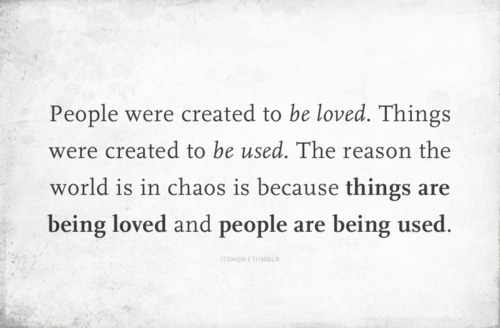
Here is a nice little something from Susanna's Tumblr.

monk222: (Christmas)
Here is a nice little something from Susanna's Tumblr.

Page generated Dec. 24th, 2025 04:19 am
Powered by Dreamwidth Studios